| Situated
in Patan Durbar Square, Krishna Mandir is perhaps
Kathmandu's finest stone wrought monument. This
temple is made in Sikhara architectural style, a
style that is commonly found in what is now known
as the Indian Subcontinent. It was established by
Siddhi Narsimha Malla of Patan in 1637 AD, as a
copy of another Hindu temple, a Krishan temple to
the South in Mathura. Many agree that its stonework
is excels that of its southern counterparts. The
temple is completely made of stone and the carving
is finer than that of the other smaller Krishna
Mandir at Patan Durbar Square built by Yogamati,
the great grand daughter of Siddhi Narsimha Malla,
in 1723.
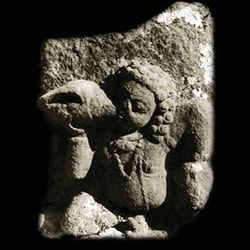
Its
architecture successfully blends two styles: the
solidly formed southern Gupta sikhara form and
the open multi-storied style of Moghul. The craftsmanship
of the stone carvers can be seen in the intricate
images of gods and the perforated stone screen
railings of the passages. There is an open passage
on the ground floor and it is empty inside. A
narrow and low passage leads to the center of
the first floor. The first floor is the main area
of worship where a large hall holds an image of
Krishna with two consorts, Radha and Rukmani,
all beautifully carved out of black stone. The
flooring also contains images of the ten incarnations
of Vishnu. The second floor contains an image
of Shiva. The small fourth floor contains no images
now; however, the people say that there was formerly
a statue of Avalokitesvara. Such placement, perhaps,
acted as an example to the harmonious blend of
Hinduism and Buddhism in Nepal. The shrine is
the destination of great crowds of worshippers
each year at the time of, Krishnastami, Lord Krishna's
birthday, when the temple is beautifully lighted
by thousands of oil lamps. It is not possible
for non-Hindus to enter the temple, but a great
deal of beauty of the temple can be seen from
the courtyard.
|