Spiny Babbler Museum: Top Banner
The Establishment
SB in the News
The Arts Club
The Shop
Editor: Pallav Ranjan, Webmaster: Prashant Gurung


TRADITIONAL ARTS

Call: 5542810, 5546725, 5527406
Email: education@spinybabbler.org
 
  World Heritage Sites and Art Complexes
Mahaboudha: Art Complex: Traditional Nepales Arts: Spiny Babbler Museum
 
Mahaboudha


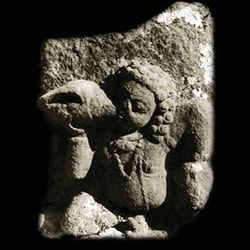
Located in Patan City, the Mahaboudha Temple features some of the finest terra cotta work in the Kathmandu Valley. It is believed that the monument is based on the famous temple at Bodhgaya which commemorates Lord Buddha's life and contributions. During the sixteenth century, Bodhgaya was a well-known pilgrimage site in the region. When Jivaraja, a Buddhist devotee from Bodhgaya, came to Kathmandu he wanted to build a temple in like that of Bodhgaya. He designed the Mahaboudha Temple, however, in a smaller size than that of his inspiration. Most, even the pujari, priest of the temple, assert that the temple was actually built by Pandit Abhaya Raj. It is said that when he returned to Kathmandu from Bodhgaya after a three-year pilgrimage, he had brought with him a model of Bodhgaya's temple during the time of King Amara Malla (1529-1560 AD). Pandit Abhaya Raj is reported to have received a vision of the goddess Bidhyadhari Devi, his kul deuta, or clan god, requisitioning him to build a temple according to the model of Bodhgaya's temple. Being a pandit, he was highly devoted to the deities, and along with his five sons, set to work in building the temple in 1555. Pandit Abhaya Raj and his five sons, Mayaraju, Byadharaju, Jagannathju, Hareju, and Budhaju, died before the temple was completed. It took another thirteen years for Pandit Abhaya Raj's grandson, Jiwa Raj, and his great grandson, Jaya Muni, to conclude the construction. In 1601, the temple was inaugurated by Sivasingh Malla.

However, in the process of building, Newars put in many original features and much of Mahaboudha's resemblance to the original temple at Bodhgaya was lost. The expertise that resulted in the fine images of the temple showed that the people of the Kathmandu Valley had long practiced the art of terra cotta and had become knowledgeable and skilled in the craft.

The temple is among the early Shikhara style monuments built in the Valley. The architectural style was developed around the sixteenth century during the Gupta period in what is now India. Also known as the "Temple of the Thousand Buddhas," Mahaboudha was badly damaged by a devastating earthquake in 1934. The descendants of Pandit Abhaya Raj once more got together to collect enough funds for the required reconstruction. The money was raised mostly by personal contributions and loans. In 1938, Prime Minister Juddha Samsher Jung Bahadur Rana, sympathized with the effort to rebuild the temple and annulled the loans while further donating some money for the construction. This sikhara temple was renovated but into a smaller size and with the remaining bricks a smaller and interesting temple dedicated to Lord Buddha's mother, Mayadevi, was built.

The temple is located nearby the Patan Durbar Square and has recently been renovated by the local community in 2001. For those who are interested in the terra cotta tradition, one of human being's earliest masteries, Mahaboudha Temple provides interesting insight and experience. Some of the images are more than two feet in height and remain highly detailed despite years of erosion.

Unfortunately, the terra cotta monument is set in a small courtyard with hardly enough open space to view the pinnacle of the temple unless one was to climb a story of a surrounding house. As in other Buddhist shrines, there is a small Vajra Dhatu Mandala, meaning a vajra placed on a stone mandala. The surface of the temple is covered with terra cotta tiles, many of which display Buddha in a meditative posture with his right hand in Bhumisparsa mudra, the gesture when he touches the ground as an answer to Mara, meaning that the earth is his witness to his efforts and meditation. There are many terra cotta beasts like lions, horses, elephants, mythical chhepu, and birds that add to the complexity of the temple. It is believed that these beasts are spiritually invoked to protect the temple from human destruction. Above the first floor platform, there are four small terra cotta sikharas at the four corners of the temple. Each sikhara is complete in itself with a base and a central tower. Originating from the middle of these four sikharas is the main tower rising above the surrounding houses. There are windows on each side of the tower and vertical rows of Buddha images leading up to another platform that holds the pinnacle. The unique gajur, pinnacle, is a metal stupa set on a massive dome. There is a line of oil lamp stands surrounding the temple along with the traditional praying wheels found at Buddhist temples and shrines.

Terra cotta is a prevalent traditional and contemporary art form in Nepal. Many households continue to use terra cotta water containers, storing pots, cooking utensils, and basins. Read about a potter's afternoon in the articles section. Visit the collectibles section to see the day to day items as well as finely crafted work of the Newars.


The Commercial and Services Section
 
THE SHOP
     
COLLECTIBLES
PUBLICATIONS
GREETING CARDS
MUSIC SECTION
THE ARTS CLUB
Spiny Babbler's Winter Arts Offering for 4 to 14 years olds children.
Learn more...
SERVICES
   
COMMUNICATION SERVICES
  UN and global agencies use our pre-production, print, web, and multi-media services.
  MAILING LIST Subscribe UnsubscribeName:  Email: 
© 1991 - 2007 Spiny Babbler and the contributors. No part of this site may be reproduced in print, web, audio, or other media without the written permission of the copyright holder/s. All material, artwork, photographs, text, protected by international copyright laws.
 
CONTEMPORARY ARTS | TRADITIONAL ARTS | ARTS PROGRAMS
Home | The Shop | The Arts Club | Contact Us