| Maths
are temples surrounded by houses forming quadrangles which were
essentially used as quarters by priests and ascetic people devoted
to the Hindu religion. They are similar to viharas, Buddhist
monasteries, architecturally and in function. However, the maths
do not have any fixed rules for height and other architectural
designs as do viharas. They were expanded over time as new wings
of houses were added. There are many viharas spread around Kathmandu
and Patan, but most of the maths are found in Bhaktapur, representing
the high majority of Hindus in the city. Most of these maths
are crumbling away as a result of neglect and some are used
as residential quarters but the Pujari Math has been well preserved
and has been recently renovated for its importance as the Woodcarving
Museum.
Pujari
Math, a Hindu monastery, stands next to the Dattatraya Temple
in Bhaktapur. It is used as a residence by the pujaris and
priests of the Dattratraya Temple. In the courtyard inside
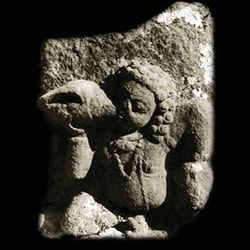
the math stands a simple image of Lord Shiva. It is believed
that this Shiva image was produced in veneration to the Pashupata
cult, a sect worshipping Lord Shiva, which has spread since
the Licchavi period. In accordance with the reoccurring nature
of building of maths, Pujari Math is composed of many buildings
added to the core quadrangle at different times. The buildings
constructed later have different designs and sizes forming
clusters of houses in relation to the fashion of the time
in which it they were built. These houses do not have any
metalwork or paintings that are traditionally included in
Newari architecture; however, there are many well crafted
woodcarvings displayed inside and outside the Pujari Math.
The
monastery complex is decorated with different wooden windows,
pillars, and frames. The wooden peacock window in the Eastern
face of the monastery has become an icon for Nepali artistic
talent. The inner border of this square window frame is lined
with small images of birds. Some carvings of flowers and branches
fill the space between the border and the central circle.
The peacock itself is protruding from the center of the window
and its tail feathers are distinctly carved. There are other
similar windows such as this with birds and carvings on the
faces of buildings. Another renowned window is the lotus window
on the North face of the building. It is a latticed window
with a lotus carved at the center. Besides these windows,
there are other traditional windows known as tikijhyas and
sajhyas. Tikijhyas, better described as latticed windows,
are present on the second and ground floor. These tikijhyas
cannot be opened but the holes let light in from outside,
however, mask the dark interior rooms from viewers outside
the window whereas the sajhyas are present in upper floors,
and can be opened inwards. The sajhyas protrude from the walls
of the houses, and in the interior there is a bench fixed
below the window for people to sit while looking outside.
These windows came as significant contributions from the Malla
period and have influenced modern day art forms readily seen
in traditional art workshops to souvenir stores. The Pujari
Math Woodcarving Museum exhibits carved wooden statues and
sculptures that date back to the fifteenth and seventeenth
centuries. Some prominent examples of these works are Dancing
Ganesh, Mar Bijaya, Radha Krishna, and Dancing Goddesses.
The pillars and frames are also extensively decorated revealing
the value of woodwork in Nepal.
|