Valuing art

  The Himalayan Times, July 28, 2002


THE FULL-TIME TEAM: (Starting from left) Andrew, Pallav, Para, Param, Sudeep, (Sitting from left) Whitey, Prashant, Suraj, Rajan, Ranju, Kamala, and Brownie. Whitey and Brownie, the two dogs are the PR personnel for Spiny Babbler
 

Himalayan News Service,
Kathmandu

Pallav Ranjan wrote poem from a young age. He often sends his pomes to poetry journals in England and that was not easy. You needed English or American stamps and he got tired of begging expatriates for stamps. ”Why not starts a poetry journal in Kathmandu?” he thought.

He quit college and eventually got a job at ‘Nepal Traveller Publications’. He talked to his friend Jitendra about the idea and Jitendra liked it. Jitendra would be the financial manager and Pallav, the editor. The journal? They decided to call it ‘Spiny Babbler’, a bird species that was considered extinct for 106years and was rediscovered in Nepal by S Dillon Ripley. ”Spiny Babbler appealed to me because it is special to Nepal,” explains Pallav. “It made sense. I was known as a critic of sorts so ‘Spiny’ seemed good and ‘Babbler’, one who babbles, talks, which poetry does. I wanted the journal to be independent.” With the help of friends, they put together finances and a manuscript. They published first few editions but Jitendra left in between.

In1992, while in Nepal Traveller, Pallav met Para and fell in love. In 1994 they quit Nepal Traveller and hiked, trekked and biked together. Para wrote poem sometimes. They decided to hold on. That was when Param, Para’s twin sister who loved painting, returned from the US. The three of them, with another friends where interested in art, in doing something exciting. They had a team.

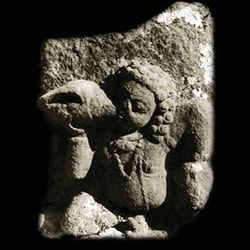
Spiny Babbler worked from the two rooms that Pallav lived in. They adapted their logo-an image of a dwarf making music with conch shell-sited at Gum Bihar, it dated back to the fourth century AD.” “We called ourselves Editorial Services and did other assignment for people,” recounts and did other Para. “We accepted assignment but things were difficult. Then began Spiny Babbler’s expansion into different fields of art.

They began working with art, literature and conducted some research works on Nepal history. In Kantipath, they set up a gallery. Then they went bankrupt and were heavily in debt. They are older, wiser and the better for it.

Today, Spiny Babbler is a “meeting of young intellectual minds” as Sanjeevani Yonzon. A volunteer puts it. She works with children at risk in the high priority area.

The different volunteer programmes at Spiny Babbler range from art, literature, and theatre to research, documentation and other projects. The volunteers are young, enthusiastic about supporting art-related ventures. “Some stay on, many leave. Most are students and they get to learn and share interests,” opines Param Limbu. “They have a great time and the experience is also emotionally fulfilling.”

”I joined the organization because a friend had volunteered,” says Sudeep Prajapati who works on animation projects and traditional Nepali art research. “This is a very good opportunity to learn about our own culture. It has changed me; the research works have made the cultures a part of me.”

Spiny Babbler has, till date, held numerous workshops, exhibition, festival, focus is interacting with the nepali community and so far they have work with different communities in Narayanghat, Sankhu, Thaiba, Darjeeling and its outlying area. In 2001 they had a Swasthani Festival. They are still on the process of making an video of ‘Muna Madan ‘ and the Theatre group will be beginning work on converting “Women of the Himalayan Kingdom” into a play.

“I have worked with the organization for a year and more now,” states Aavash Piya, coordinator of the theatre group. “There was no theater group then. We started with the Swasthani Festival and have continued since. The experience has enhanced my people skills, acting and directing. I like what I am doing. It involves many people and offers a broader perspective of the world,”

As it grew, Spiny Babbler encompassed a lot of field other wise redundant. Their website is a museum and a veritable centre for information related to Nepali literature, art and culture. This year it began its multinational involvement with an international volunteer programme. Their first international volunteer Andrew Garnett, a Canadian, has been working with them for a month and more now.” This is different,” says he. “All a tourist sees is the tourist sites but this way. I discover what Nepal really is? I have been helping with the coordination of the projects, teaching kids about art. We work with whatever can find and make collages. This way the children learn that art is not limited.” Spiny Babbler has this remarkable way of letting each participant feel special. They do not ask them to compete.

If they were to go their separate ways, what would happen? “What really matters, what our mutual dream is for Spiny Babbler to continue even if we are not there,” adds Para. “We want to hand it over to young enthusiastic people who share a love for art.”


Visit the organization at:
Visit www.spinybabbler.org
Phone: 542810