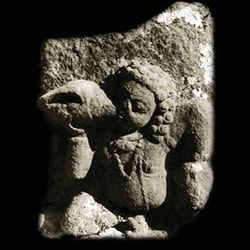
Shakti
unites women of all walks of life, from all over the world. Any
reader would identify herself with women mentioned in the published
collection of articles.
The
little digest reflects how women are perceived, how women perceive.
The reader finds herself no different from other women. She spontaneously
relates her own life to situations that woman face in the book.
The essays transcend time and cross-cultural difference.
In
“Golden Lilies”, writer Bhuwan Singh Thakur gives a picture of women’s
status and lifestyle in ancient China. But women of modern times
would still find in it resemblance of their own status and lifestyle.
Tiny
feet were called “golden lilies” which, if a girl did not have,
then no one would marry her. “A strange, painful custom,” says Thakur.
Today, we no longer have the custom of foot-binding. But we still
have other strange painful customs that have bound us in chains
since time immemorial.
Bound
by a set of social, religious mores, women live within its tight
periphery. We dare not venture out, lest we be condemned, banished
from society.
“It
is this dark fear that makes us censor ourselves,” says Marie Elena
Varela in the essay, “Self- censorship”. Although it is a Latin
American woman’s perspective (translated into English by Charles
Kuchinski), self-censorship is a universal experience that most
writers face. Here, Shakti
goes beyond women’s perspective of the subject of censorship. Men
would also strongly identify themselves with Marie and her views
on self-censorship.
Shakti is not a magazine totally oriented towards women. Although,
one would think it is. The sketch of a seething female demon on
the cover and the editor’s comment could mislead readers into thinking
that it is a women’s magazine.
Shakti has a collection of short, simple articles and poems that are
interesting for both men and women. The well-edited simple prose
flakes open the stark realities of life. The essays – such as “All
Those Clothes We Washed”, “Thus Has It Been Being Born”, “Violence
Against Women”, “Frogs In the Bedroom” – portray life as it is.
Those who see life through tinted glasses, those who read to escape
into an unreal world get jolted back to real life.
The
collection of poetry includes “Insanity” by Laxmi P. Devkota (translated
into English by Pallav Ranjan), “Separation” by Koumanthio Z. Diallo,
“Respect” by Charles A. Law, “Exposed In Huairou” by Shakti, “Looming”
by Thomas L. Guta and “Communicating” by B. Thangden.
Photos
of traditional art and simple sketches adorn the pages. The photo
essay entitled “The Mistress” by Pukar M. Pradhan gives a touch
of nostalgia to the journal.
The
serialization of Greta Rana’s novel Right
As It Is is another noteworthy feature of the magazine. The
spring volume contains the sixth chapter of the novel, enough to
motivate the reader to buy the next issue of the quarterly.
|