|
Building
Cross Culture Literary Bridge
Anthology
of Australasian Stories; Publisher; Spiny Babbler, Kathmandu,
January 2003; Editor; Brian Dibble; Pages; 296; ISBN: 99933-53-25-6
The
Rising Nepal, March
7 , 2003
By Bhimsen Thapaliya
THIS
collection of literary creations from Australasian (a team denoting
Australia, New Zealand and other neighboring island in the South
Pacific) tries to familiarize the Nepalese readers with the contemporary
works from the region. For those who want to be familiar with the
latest trend of foreign writings particularly from Australia and
New Zealand, this book has added a new dimension. With the hope
that measures will be taken in the future to introduce the readers
in the oceanic countries with the work of Nepalese writers through
translation, this book has come as a commendable initiative on cultural
sharing between this Himalayan Kingdom and the Continent of the
Wonders.
The
48 pieces of writings that make up the anthology were collected
from undergraduate and post-graduate students of creative writing.
They come from 22 different institutions across Australia and New
Zealand. According to the editor of the book, the styles of writing
are both traditional and experimental which make the book an interesting
collection. Interestingly, 39 out of the 48 pieces of works are
by women writers.
Para
Limbu, an editor at Spiny Babbler says that the editor of the book
presents to us contemporary literature of Australasia addresses
topics ranging from different lifestyles in the cities of Australia
and New Zealand to socio-cultural or political issues that individuals
or communities presently deal with in the region.
The
literary anthology speaks through the minds of 48 creators who are
stated to represent the essence of what Australasia is today the
people, their beliefs, and the social values and ideals they have
cultivated. Thus the book is going to offer an important insight
into the Australasian life, not only in the physical sense of the
word but even beyond that. In totality the book serves as the window
to not only the latest trends of the Australasian writing but the
social reality of the region as well. This provides the Nepalese
writers an opportunity to taste the Australian writings, be surprised,
bemused and confused and finally be enlightened. After reading the
works adorned with wide shades of color and style, one will be naturally
tempted to compare them with writings in Nepal. Further one will
try to use the book as a kaleidoscopic to observe and compare the
ways of life in Australia and here in Nepal, countries so removed
geographically.
Spiny
Babbler editor Limbu clarifies the objective with which her organization
brought out the book saying, "This is the part of Spiny Babbler's
multinational programme. With this publication, our organization
attempts to establish international relations and help to nurture
cross-cultural consciousness and appreciation among the audiences
in Nepal, Australia and other parts of the world."
The
book is a friction collection though some elements of drama and
poetry are also mixed. Most of the writings are experimental and
apply avant garde style of literary writing. A typical example of
experiment can be seen in the reworking (described as the SMS version)
of Shakespeare's plays Much Ado About Nothing. Act II, scene I of
the play is produced in the language that is commonly used today
in the Internet chatting. In fact a completely new mode of messaging
has emerged with the arrival of the Internet, mobile and paging.
This reworking reminds one of the telegram languages of the past
that endeavored for word economy. But in contrast to telegram message,
this SMS language seeks even letter economy. For example, SMS chatter
uses just U instead of 'you', H8 for 'hate' and B4 for 'before'.
Further, innovative abbreviations and acronyms have also come into
vogue with interesting spelling shortcuts such as MYOB for 'Mind
your own businesses and CUL8R in place of 'see u later'. Even symbols
have replaced words such as %) means 'confused' and :*) stands to
mean 'drunk". Such new experiments may even prompt the literary
world to devise some new genre.
The
book tries to bring variety of works together. One has a rare opportunity
to be mesmerized in fantastic and diverse art of expression employed.
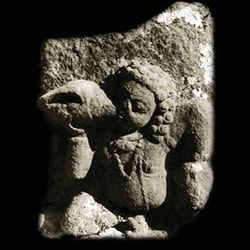
Ten pictures that accompany the writings tries, it seems, try to
give graphic dimension to literature.
But
where are the mainstream and traditional writings of Australasia?
These works, wrapped up in this anthology, are only the hybrid products
of new generation writers. Absence of the standard works of established
writers of Australia is a distressing weakness of the book. Without
classical works, no hybrid and experimental writings are born.
Editor
Brian Dibble, Professor of creative writing in Australia's Curtin
University, wonders in his editorial note what the Nepalese reader
might expect from a collection and moves on stating that New Zealand
and Australia are caught between anger, fear, frustration, hatred,
intolerance and prejudice. He expects the readers to comparably
reach out to the world from their perspective and understand the
source of this conflict.
|