An Organisation With A Cause
The Rising Nepal, January 3 , 2003
By Rangon Bhattarai

Have you noticed the red house with an interesting sign at the top and corn hanging from the leaves in front as you walk through Bakhundol? Well that's Spiny Babbler for you. We don't see corn hanging from a house everyday in the city and Spiny Babbler looks a little unusual. But Spiny Babbler is an unusual organization. They have devoted themselves in promoting the arts (art, literature, music, and theatre) at a time when people, especially the young generation, consider art and literature to be boring topics and everyone is only concerned with making money.

Among the main people behind Spiny Babbler is Palled Ranjan. He worked as a volunteer at Awon library from 1988 to 1991. He quit his studies and got a job at a magazine called "Nepal Traveler." There he conceived the idea of publishing a journal, entitled "Spiny Babbler" and it was then that Spiny Babbler began as a simple poetry journal.

In 1993 Pallav met Para Limbu and they decided to continue the journal. They traveled extensively in Nepal gathering information. By the end of 1994, to fund the journal, they started giving publication consultancy and also did some freelance writing of their own. Param designed the covers for the journal and Saurava did art-related work while Para and Pallav gathered the articles that were to be published in the journal.

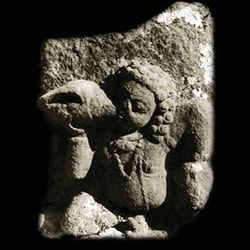
In 1995 Spiny Babbler got an organizational setup. They published the winter edition of the journal with an interesting cover. The cover showed a Gandarva blowing a Sankha. In 1996, they opened an art gallery in Kantipath. They displayed artwork, poetry editions, and photographs that they had taken in their travel across Nepal. Their offices were in Bakhundol in early 1997 where they conducted exhibitions, poetry readings, and discussions involving many poet, artists, and other literature related people and published books like "Fragments," "Swasthani," "Selected Poems of Nepal," "Selected Poems of the United Kingdom" and "Creating Verse" as well as continuing to give publication consultancy.

From 1999, the activities of Spiny Babbler heated up. Instead of focusing only on promoting the arts, they focused on getting the young generation involved in their activities by conducting volunteer drives. They started the drive because they recognized the youth's potential in different field and had also worked as volunteers themselves. They also know the benefits that the volunteers would get if they worked in the organization. Moreover they shaped up different activities that were suitable for young people and for the targeted audience.

They regularly conduct different seminars, talk programs and workshops that give the volunteers better ideas on improving their working capabilities. The volunteers learn about literature, art and also recognize people at risk and know how to help them. The youth program is responsible for managing different activities like teaching the children about the arts, for people at risk program, and for different educational institutions and communities. They learn to work efficiently and this way Spiny Babbler has been training the upcoming generation about our history and the methods of conserving them.


At present they are conducting several activities like "educational focus," "multinational involvement," "festivals," "youth programme" and "support creator program." Under educational focus program they are conducting activities for the people at risk like the street children, girls at risk, children whose parents are in prisons, and those with severe mental disorders. Spiny Babbler has recently signed TORs with organizations like Prisoner's Assistance Mission (PAM), Rokpa (shelter for street children), Mental Hospital, Kanti Children's Hospital, and People In Need (PIN).

Art can be used as a medium to bring awareness and also make an impact upon people. Spiny Babbler volunteers use this idea while carrying out programs in different places. They shape and create programs with the help of Spiny Babbler. The volunteers conducting the people at risk program did a three-month testing on their particular location. Then they held workshops and devised a syllabus to conduct various activities. They formed schedules and obtained the tools that they needed for the program. Now they are busy conducting various programs. They have conducted arts related programs at St Xavier's School, Nirmal School, Social Work Campus and also involved many schools of Sankhu and other outlying communities. They organized an art festival in Thaiba, which was about farming in the Himalayas, and the Sankhu festival, which was about human values in the Sankhu monuments

They have also got international involvement in their work. They launched cultural tourist program involving Annapurna, Kathmandu Guest House, and Hotel Yak & Yeti among others. There they presented different cultural programs to international visitors. They carried out the project that resulted out a book entitled "Young Minds of Twenty Nations" that featured essays and stories by young people of twenty different countries on mountain issues. A full cover book "Mountains Forever" also featured the stories based on Param Meyangbo's paintings. They have held talk programs by foreign writers and publishers. "Selected poems of Europe" and "Selected Stories of Australia and Neighboring Islands" are being prepared by leading editors and professors for Spiny Babbler.

They have conducted different festivals like Swasthani Festival in which they preformed the stories as a play in English, as reading in four languages, yagya, puja, and three photo exhibitions. Last year they organized a nationwide poetry festival and conducted programs at Pokhara, Darjeeling, Dharan, Kathmandu, and Narayanghat.

Support Creators is another remarkable program that they have devised. They document the lives of artists, musicians, poets and the people related to art and literature field. Talk programs are held involving the artists. They also hold poetry-reading that involve the top poets of the country.

Spiny Babbler has a web site too, which is www.spinybabbler.org. It is in fact a museum which has traditional arts, contemporary arts and it gives you a general idea of the programs that Spiny Babbler conducts.The museums gets [8,000] visitors a month from [eighty] different countries and some of its feature are that it allows online registration of national and international volunteers.

Thus, we can see that Spiny Babbler is not only helping to promote and create awareness about Nepalese arts but is also training the new generation to love and preserve our cultural heritages and arts. The organization has been doing commendable works in the Nepalese arts field. We can all be proud of its work and should recognize its importance in our society if we want to promote and conserve the Nepalese arts.